
Rockland County Arrest Log Sources
Rockland County keeps no single Sheriff blotter listing every booking. Arrest records sit with each agency instead. The Rockland County District Attorney press archive posts selected investigations, arrests, indictments, and sentencing matters. New York State Police news carries Troop F activity. Orangetown runs an official release gateway. Ramapo posts date-range arrest summaries on its account. Clarkstown's police page lists no dedicated arrest-log link. Treat these channels as announcements, not a jail ledger. One item may date the incident, the arrest, the arraignment, or a later indictment, so the publish date rarely tells you when a person was arrested.
Read Rockland Arrest Reports
Start with official sources and keep the time frame explicit. A multi-day arrest review shows published activity only, never a promise that every booking made the list.
- Check the District Attorney and State Police release archives by publication date, then read each item for its actual arrest or incident date.
- Review the Orangetown Police release hub and the official Ramapo Police account for town-level posts.
- Record the agency, source URL, date range, and whether the item is an arrest summary, investigation release, or later court event.
- Use Corrections at 845-638-5600 for current county custody. Use the 24 Hour Arrests process when the event is fresh.
- Request an older specific record from the originating agency under FOIL when the public post no longer reaches the needed period.
Local police, Sheriff, State Police, court, and jail records each answer a different question. The Rockland County recent-arrests hub maps those custody and record types.
Rockland Arrest Log Fields
No single official format governs every entry. These fields help you compare a town summary, an agency release, or an archive item without treating them as identical records.
| Field | How to read it |
|---|---|
| Source and agency | Shows who published and who handled the arrest; they may differ. |
| Covered dates | A weekend or date-range heading may differ from the post date. |
| Name | Confirm identity; a matching name alone is not enough. |
| Charges | Charges announced or entered at booking, not convictions. |
| Arraignment or remand | Early court action; remand means detention was ordered. |
| Custody statement | A status at the time of publication that may soon change. |
| Image | A story image is not necessarily an official booking photograph. |
| Later disposition | Dismissal, plea, acquittal, conviction, or sentence belongs in the court record. |
Charges can change as a case moves forward. Some get dismissed entirely. The final judicial outcome, called the disposition, lives in the official court record, so follow the cited matter there.
Rockland Weekend Arrest Summaries
Ramapo's official account is the steadiest town-level pattern. It posts arrest-activity images with date ranges and labels like "as of 10am," including weekend summaries. That habit sets no fixed posting hour and no guaranteed weekly series. Orangetown's page routes readers to releases and social news. Clarkstown exposes no comparable log. Holidays can delay public notices even while booking work continues. An empty press page never proves a quiet weekend. For current custody, ask Corrections. For town arrests, use that department's records route.
Rockland Arrest Archives and FOIL
Older Rockland arrest material does not sit in one place. Social media posts vanish without warning. Agency release pages keep dated stories, yet none of them promise full coverage of every arrest made. That leaves archival rules doing the heavy lifting. New York's LGS-1 law-enforcement schedule treats certain arrest-summary logs as permanent, while case files and identification records land on shorter retention clocks. A retention rule is not a promise, though. It says nothing about whether a record is public or whether Rockland County still holds the item you want.
When an arrest record sits beyond any public window, a focused county FOIL request is the practical next move. Name the Sheriff or Corrections custodian directly. Town police records belong with the town records officer instead. Ask plainly whether the arrest record was retained, transferred, destroyed under schedule authority, sealed, or withheld. FOIL opens the door to records that exist. It cannot force an agency to build a fresh multi-day arrest list for you. The state archives schedule sketches the record categories that shape older requests.
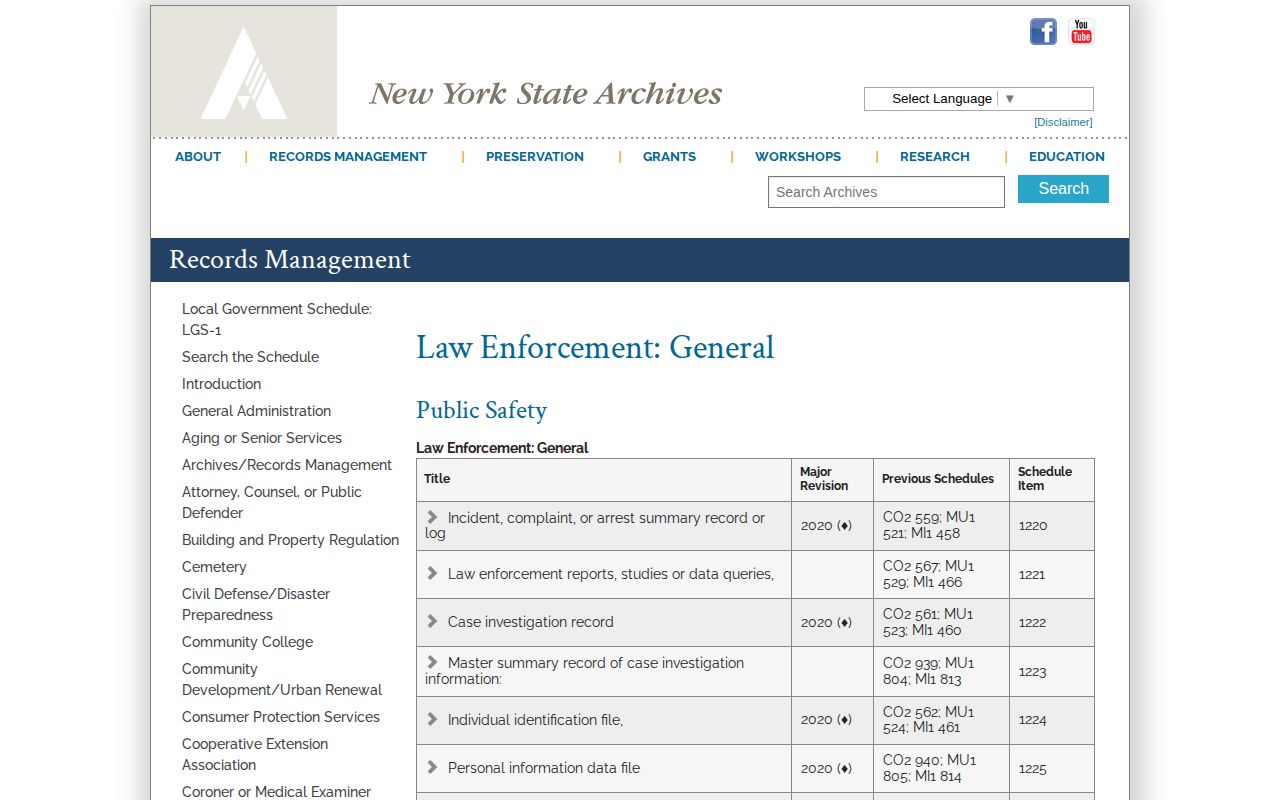
The schedule guides retention questions, but it is not a public Rockland arrest database.
Rockland Arrest News Landscape
Official sources come first. The DA, State Police, Orangetown Police, and Ramapo Police stand behind their announcements. Local news is not a custody system. Rockland Daily breaking news runs event-driven crime and arrest coverage, often built on agency or DA information.
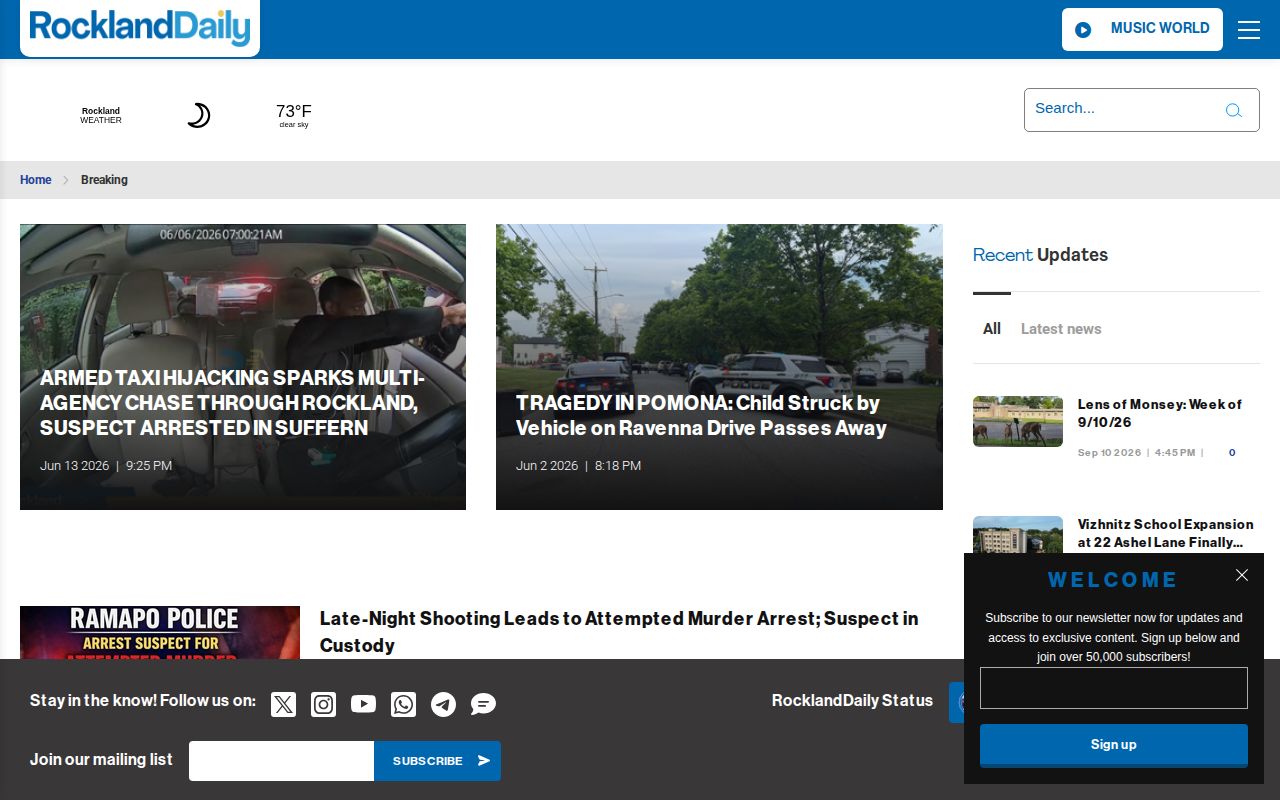
A news discovery page is not a booking log. Check the article date and the agency attribution behind each story. The Rockland County Times crime blotter shows an older weekly format from 2016 and 2017.
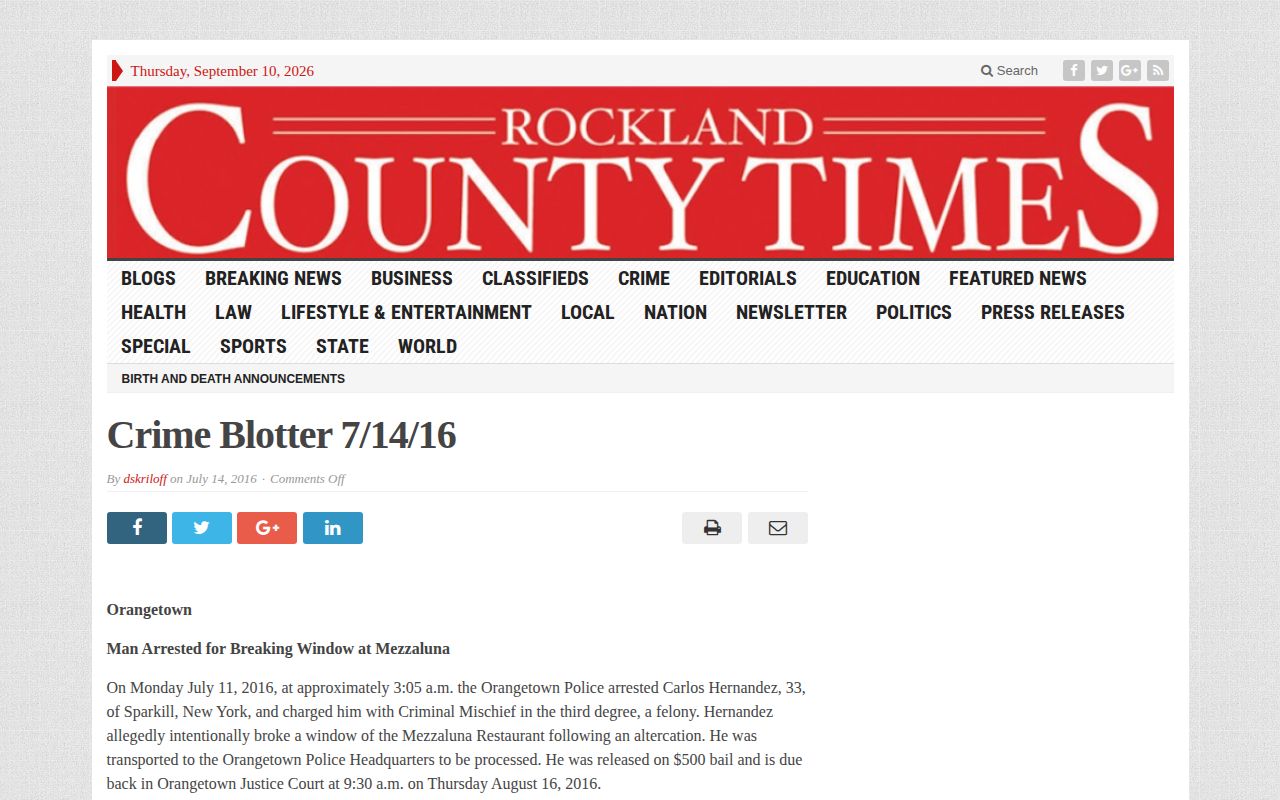
That dated blotter adds history, not a current schedule. Patch, Rockland News, Rockland Post, News 12 Hudson Valley, and Newport Dispatch also publish selected stories. None serves as a full countywide booking-photo feed.
Rockland Arrest Publication Changed
A 2019 Sheriff report described app-based inmate information and a Most Wanted feature. Current app descriptions promise neither. That gap matters when an old article points you to an app roster. Check the installed menus instead of repeating a dated claim. Publication channels change faster than records rules do. Save the source URL. Also save the access date. Then go to the originating agency when a former feed is gone. A dead web page doesn't erase an agency or court record.
Rockland Arrest Log Agency Map
Five agencies share the work in Rockland County. Ramapo, Clarkstown, and Orangetown keep their own municipal records and dispatch channels. The Sheriff Police handles county-wide duties. New York State Police Troop F covers Rockland along with four neighboring counties. The District Attorney can also step in after an arrest, announcing a joint investigation or a prosecution, which means a single case may surface in several places at different stages without being several separate arrests.
| Channel | Best use | Limit |
|---|---|---|
| Town police post | Local activity and agency attribution | Not every event is posted |
| DA release | Selected investigations and prosecution context | May appear well after arrest |
| NYSP news | Selected State Police activity | Troop page spans several counties |
| Corrections | Current county custody confirmation | No public searchable roster verified |
| Court record | Appearances and disposition | Separate from the booking log |
Check the dates before you match up entries. A police summary reports the arrest, a DA release may report an indictment, and a court calendar shows a future appearance. Same case, three different records, none of them interchangeable.
Unofficial Rockland Arrest Indexes
Beyond the official sources, several commercial sites publish Rockland County arrest indexes. RecentlyBooked runs a rolling recent-arrests list. Arrests.org favors a "most recent bookings" format. Busted Newspaper numbers its county pages, and Mugshots.com skews mostly historical. None of these replaces the Rockland Sheriff database. Publisher disclaimers admit the truth: accuracy and freshness are not guaranteed. An entry might show a name, a date, a charge label, or a booking photo.
Missing from an index does not mean no arrest happened. An old photo proves nothing about custody today. Track the agency behind the entry, check Corrections when county custody matters, and let court records settle the outcome. Mugshots.zone has no verified Rockland-local page; a national landing page is not a county source. The arrest-log task is to locate and date records, not to build a gallery of people.
Several outlets often repeat one agency release. Go back to the original instead. It carries the clearest date, the agency's own attribution, and the exact wording of the charge. Then follow the court docket for later changes, since repetition across news sites adds nothing.
Public Record Search
Sponsored Results